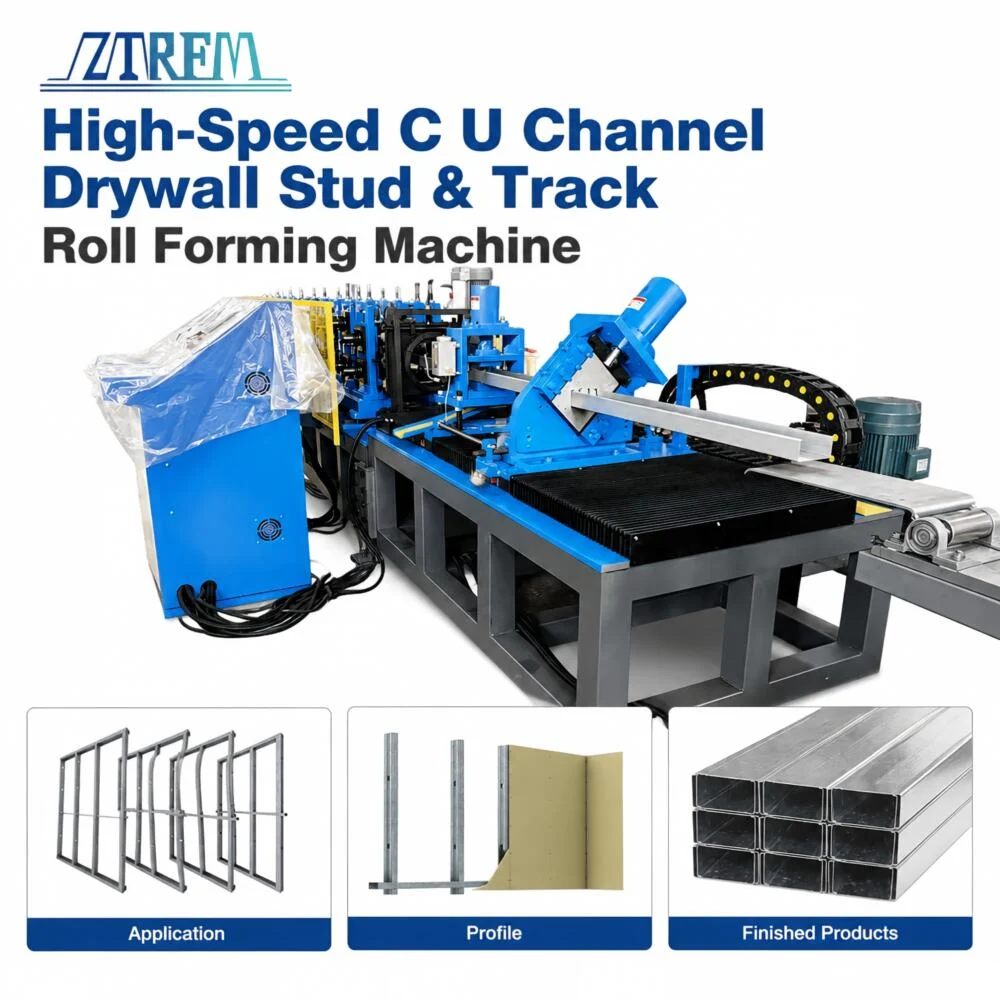
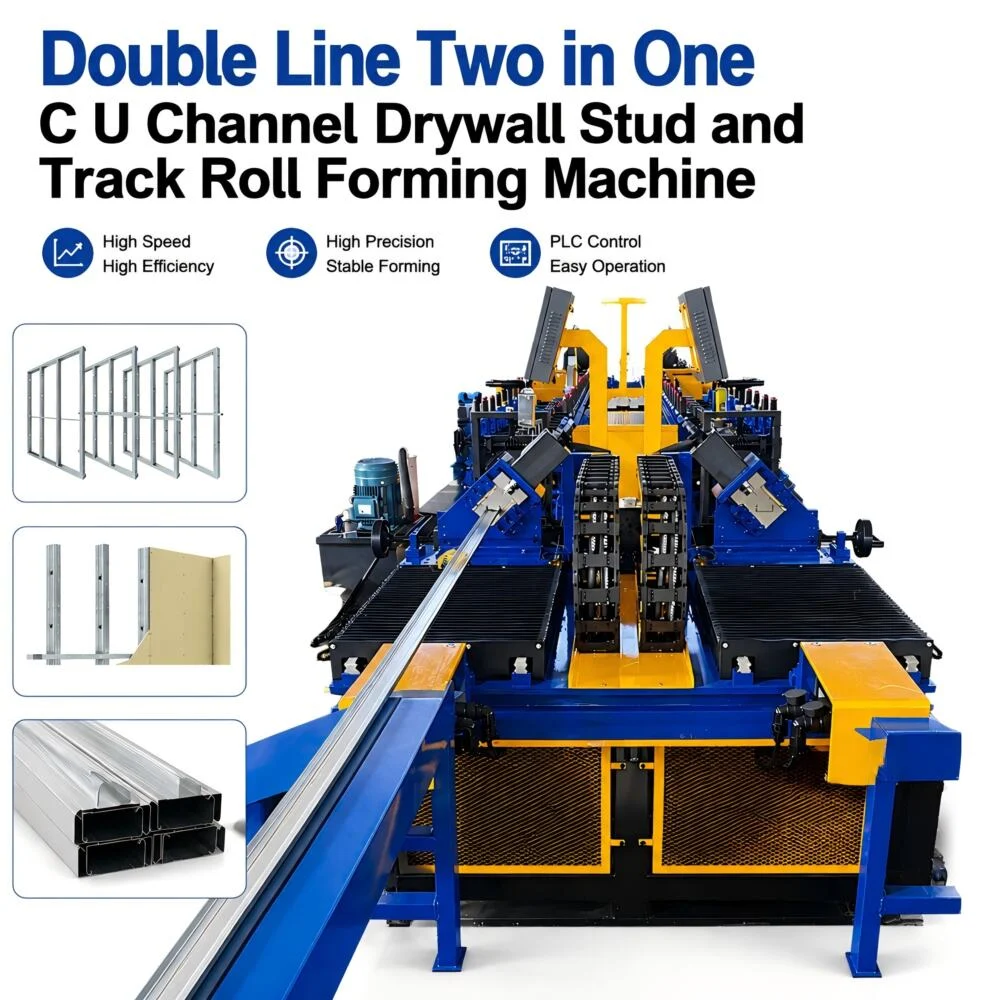
Our High-Speed C U Channel Drywall Stud & Track Roll Forming Machine is a high-performance cold bending forming solution designed for light steel keel manufacturers that need to produce C-shaped and U-shaped Channels with minimal downtime.
This C U Channel machine is designed for high-speed continuous production and can process galvanized steel, cold-rolled steel, and high-strength strip steel (thickness 0.31–0.9 mm) into precisely shaped light steel components. It is suitable for partition wall keel and ceiling keel production workshops and large Channel suppliers that require frequent specification changes.
Key advantages of C U Channel machine :
- C and U are interchangeable – tool-free replacement, no roller replacement required
- Infinitely adjustable dimensions – servo or manual adjustment of web (50–150mm), flange (25–50mm), and lip (6–12mm)
- One-piece hydraulic punching – precise hole positioning, length tolerance ±1.0 mm, directly punching threading and connecting holes
- High speed and durability – 20–30 m/min, Cr12 die steel rollers (HRC58–62°)
- Fully automated – only one operator required from uncoiling to stacking
- Ready for export – CE certified, voltage (380V / 50Hz), fumigated wooden crate packaging
Technical Specifications:
| 1.Formed Material | PPGI,GI,AI | Thickness:0.31-0.9mm | ||
| 2.Decoiler | Hydraulic automatic decoiler | Manual decoiler(will give you as free) | ||
| 3.Main body | Roller station | As your requirement | ||
| Diameter of shaft | 60mm solid shaft | |||
| Material of rollers | 45# steel, hard chrome plated on the surface | |||
| Machine body frame | Metal steel welded | |||
| Drive | Gear transmission | |||
| Dimension(L*W*H) | 7800*800*1200(customize) | |||
| Weight | About 4.5T | |||
| 4.Cutter | Automatic | cr12mov material, no scratches, no deformation | ||
| 5.Power | Motor Power | 5.5KW | ||
| Hydraulic system power | 3KW | |||
| 6.Voltage | 380V 50Hz 3Phase | As your requirement | ||
| 7.Control system | Electric Box | Customized(famous brand) | ||
| Language | English(Support multiple languages) | |||
| PLC | Automatic production of the whole machine. Can set batch, length, quantity, etc. | |||
| 18.Forming Speed | 40-100m/min(customized) | Different speed designs for options. | ||
In-depth analysis of core capabilities – what makes our CU Channel forming machine the right choice
A CU Channel forming machine is more than just a set of rollers and a cutting blade. Its true value lies in how efficiently and precisely it handles profile interchange, sizing, punching, and production control. Below, we analyze in detail the core technologies defining a high-performance CU Channel production line and explain why each technology is important to your business.
One Machine, Two Profiles – C/U Quick-Change System
Challenges faced by traditional users:
In traditional Channel production, switching between C-type Channels (with rolled edges) and U-type Channels (without rolled edges) requires disassembling numerous rollers, specifically adjusting or replacing the rolled edge unit, and realigning the entire production line. This process typically takes 2–4 hours, resulting in significant downtime and consuming a large amount of skilled labor.
How our quick-change system works:
Our CU Channel machine features specially designed interchangeable forming units. Rollers for C and U profiles are arranged at opposite ends of the forming section, and the rolled edge forming module employs a servo/pneumatic automatic advance/retreat design. To switch between profiles, the operator can rotate the main forming frame 180° (semi-automatic model), or have it automatically flipped into place under PLC control, while the rolled edge unit automatically extends or retracts. This design achieves a seamless transition between C and U profiles without disassembling any rollers or reassembling any parts.
Three interchangeable options to meet your production needs:
| nterchange Type | Operation | Changeover Time | Best Suited For |
|---|---|---|---|
| Fully Automatic | CU profile switching, size adjustment, and hole positioning all controlled by PLC via touch panel — one-button operation | Within 1 minute | Large-scale production, frequent profile changes, high efficiency requirement |
| Semi-Automatic | Size adjustment by push button; CU profile interchange requires manual rotation of the unit | Within 10 minutes | Medium-scale workshop, moderate change frequency |
| Manual | Both size and CU interchange by manual adjustment | 15–30 minutes | Small workshop, single product type, budget-conscious |
Value for you:
- One machine replaces two dedicated lines – reducing capital expenditure by 40–50%
- Minimum downtime between profile changes – higher machine utilization
- No need to disassemble or replace rollers – less labor, lower skill requirements
- Rapid response to orders requiring both C-type and U-type Channels simultaneously
- Extremely short lead times to meet urgent project needs
Unlimited Size Adjustment – Adjust Web Height and Flange Width Without Changing Rollers
Challenges faced by traditional users:
Conventional Channel machines require replacing the entire roller set or repeatedly adding/removing shims every time the web height or flange width is changed. This is not only time-consuming but also forces factories to stock large quantities of molds and shims.
How our automated size adjustment system works:
Our CU Channel machines are equipped with horizontally adjustable subframes to support the forming roller assembly. These subframes are driven by precision lead screws and servo motors (or manual screws) and can move synchronously inward or outward. The operator simply inputs the required web height and flange dimensions on the touchscreen, and the PLC system automatically and precisely positions both sides of the forming section to the target width. This is “stepless sizing”—any size within the machine’s range can be produced directly without any tool changes.
Adjustment range covers the majority of standard Channel dimensions:
| Dimension | Adjustable Range (Typical) | Adjustment Control |
|---|---|---|
| Web Height | 80 – 400 mm | PLC + servo/motorized |
| Flange Width | 40 – 120 mm | PLC + servo/motorized |
| Lip Length | 10 – 30 mm | Fixed or adjustable by rollers |
Two level options to suit your production volume:
| Option | Adjustment Type | Adjustment Time | Maintenance / Complexity |
|---|---|---|---|
| Standard Economical | Manual adjustment of sub‑frames via hand wheel or press button; dimensions read from scale | 10–15 minutes per size change | Low, suitable for single‑size batch production |
| High‑End Servo | Fully automatic via servo motors; dimensions input via touch screen; no human intervention | Within 2 minutes | Very low, ideal for multi‑size, high‑mix production |
Value for you:
- No need to change rollers, no need for shim inventory—significantly reduced mold costs.
- Coverable of any web height and flange width—ultimate flexibility for handling irregularly shaped orders.
- Size changeovers in minutes—more batches can be completed per shift.
- Handle small-batch, one-off orders with ease, without the risk of production interruptions.
- Millimeter-precision material output, reducing material waste.
Precision Online Punching – Hydraulic + Servo Positioning System
Why Automatic Punching is Important:
In light steel Channel systems, the Channel requires precise threading holes, connecting elongated holes, and mounting holes. If the machine cannot automatically punch the required hole shapes online, the operator can only drill offline by hand, resulting in low efficiency, poor consistency, and high labor costs.
How Our Hydraulic Punching System Works:
Our CU Channel machine integrates the hydraulic punching station directly into the forming line. The punching process can be arranged in pre-punching (punching while the material is still flat, suitable for large or irregularly shaped holes) or post-punching (online punching after forming, with higher precision).
The punching position is precisely controlled by a servo feeding system. As the coil passes through the production line, the servo encoder tracks the strip position in real time. Once it reaches the preset hole coordinates, the hydraulic cylinder instantly completes the punching, forming various shapes such as round holes, square holes, and elongated slots.
Punching positions and configurations available:
| Punching Location | Typical Applications | Configurability |
|---|---|---|
| Web side | Bolt holes for rafter connection, water drainage slots | Customizable positions, fully adjustable by PLC |
| Flange side | Purlin‑to‑Channel connection, bracing system mounting | Supports round holes, slotted holes, logos |
| Flat sheet (pre‑punching) | For placement outside of roll‑formed ribs | Easier die change, suitable for non‑critical patterns |
Punching unit configurations:
| Configuration | Max. Holes per Stroke | Flexibility |
|---|---|---|
| Single‑punch | 1 | Maximum precision, ideal for custom or non‑standard patterns |
| Double‑punch (two holes simultaneously) | 2 | Efficient for standard paired bolt holes |
| Multiple‑station programmable | 3–4 independent stations | Most flexible, each station can be turned on/off independently |
Value for you:
- Eliminate offline drilling process – seamless flow from roll material to finished Channel
- Servo positioning accuracy up to ±0.5 mm, consistent hole spacing
- Simultaneously punch round holes and long slots to meet wiring and connection specifications
- One-click switching between hole patterns for different work orders, no need to change molds
- All holes are formed in one pass, ready to use out of the machine
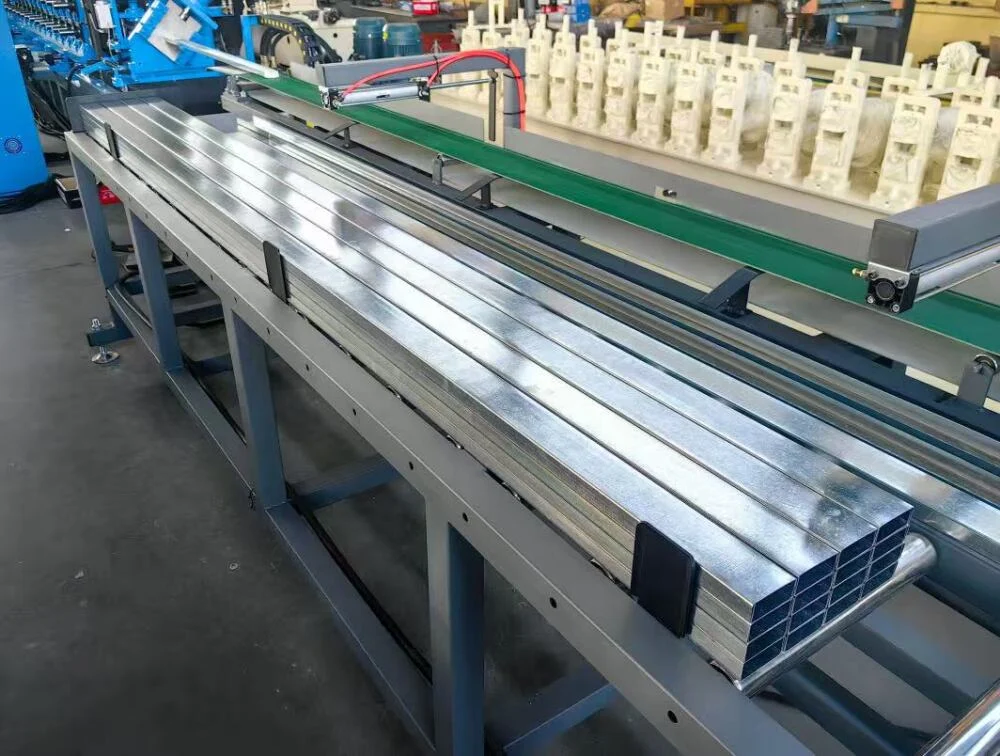
Fully Automated Production Line – From Uncoiler to Stacking
Complete Manufacturing Process: The modern CU Channel machine is an integrated continuous production line, including: hydraulic uncoiler → feeding and leveling → servo feeding → hydraulic punching station → C/U interchangeable forming main unit → hydraulic cutting → automatic stacking/palletizing.
Complete process flow description:
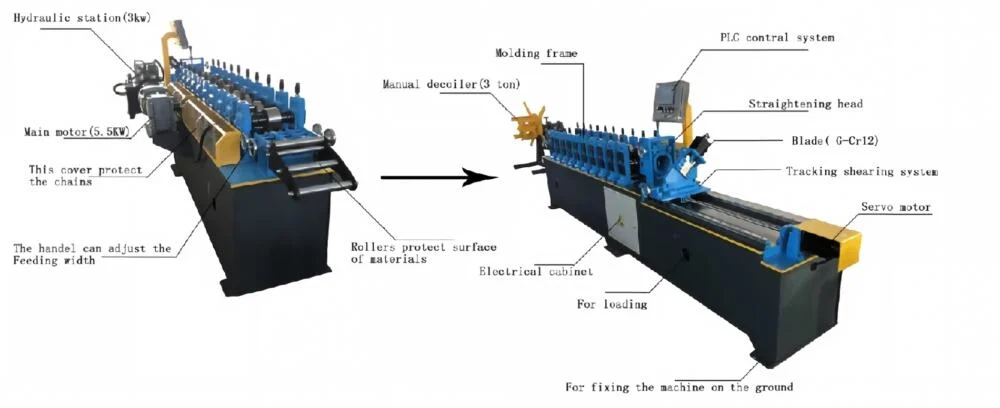
Key Features of the Fully Automated Control System:
- PLC + HMI Touchscreen Integration — Siemens, Mitsubishi, or Panasonic PLC with an intuitive graphical interface.
- Preset Production Parameters — Set batch quantity, cutting length, punching position, hole spacing, and profile specifications on the HMI.
- Automatic Counting and Length Control — Real-time tracking of production progress; automatically stops when the set quantity is reached.
- Multi-Language Support — Supports English, Spanish, Arabic, French, Russian, etc., ensuring smooth export.
- Fault Alarms and Self-Diagnosis — Instantly displays alarm causes and inspection suggestions, shortening troubleshooting time.
Value Brought to You:
- One operator can control the entire production line — reducing labor costs by over 60%.
- Preset parameters eliminate manual setting errors, ensuring highly consistent product quality.
- Accurate cutting length and hole positions fully meet on-site assembly requirements.
- Automatic stacking reduces worker handling, lowering labor intensity and injury risk.
- Remote diagnostics and program updates significantly reduce after-sales waiting time for overseas users.
Core Technology Summary – Why These Features Make a Difference
| Capability | Traditional Machine | Our CU Channel Machine |
|---|---|---|
| Produce both C & U | Requires two separate machines or hours of changeover | One machine, changeover in 1–15 min |
| Change Channel size | Needs roller swap / spacer addition | Infinite sizing, no roller change |
| Hole punching | Manual offline drilling | Servo‑controlled inline hydraulic punching |
| Production control | Manual measurement, operator‑dependent | PLC + touch screen, fully programmable |
| Labor required | 2–3 operators | 1 operator |
| End‑to‑end processing | Disconnected stations | Integrated line from decoiler to stacking |
Fully Automated Workflow – A Continuous Process from Steel Coil to Finished Keel
Our CU Channel forming machine is designed as a fully integrated production line. Once the parameters are set on the touchscreen, the entire process, from uncoiling to finished product stacking, runs automatically.
Production Flow Chart:
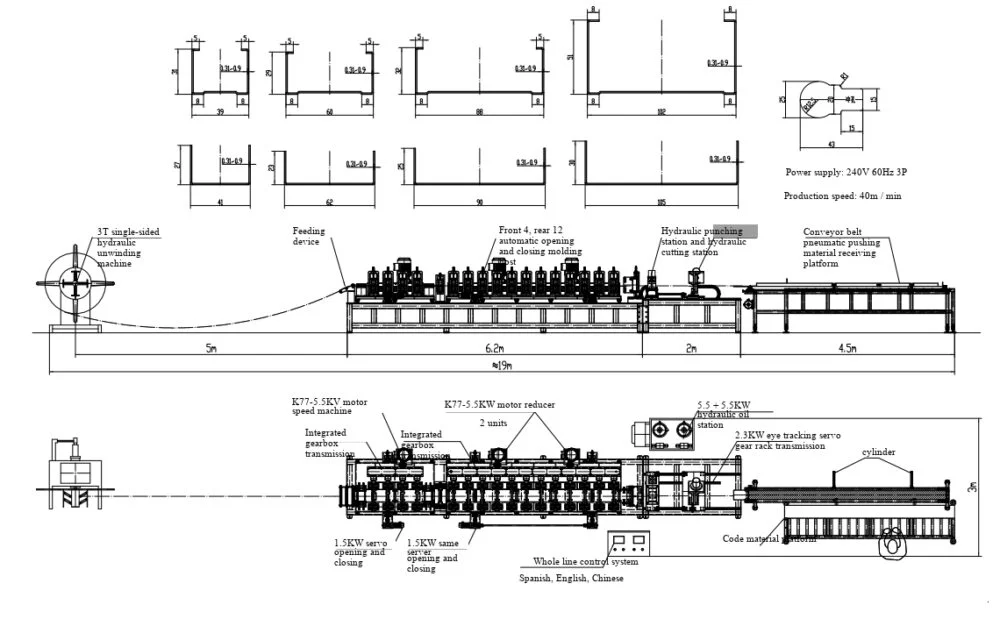
Detailed step-by-step instructions:
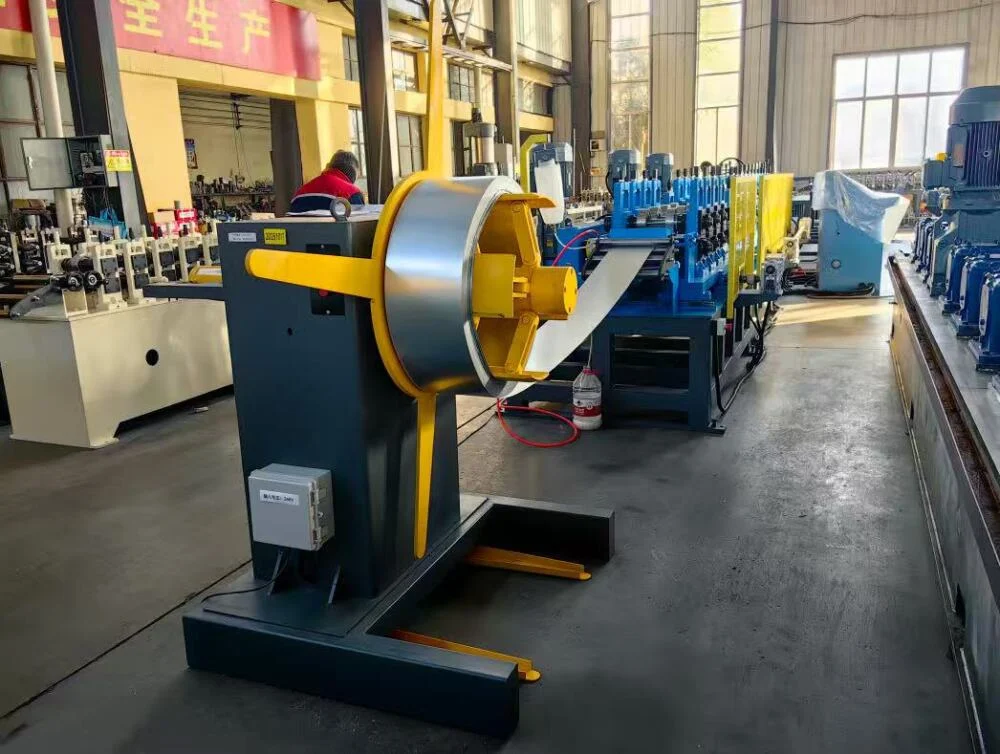
1.Hydraulic/Manual Uncoiler
Accommodates steel coils (typical capacity: 5T, 7T, or 10T). Unwinds the coil and feeds the material into the production line at a controlled speed.
Manual/hydraulic expansion optional; braking system prevents free rotation; coil end sensor triggers an alarm when the coil is depleted.
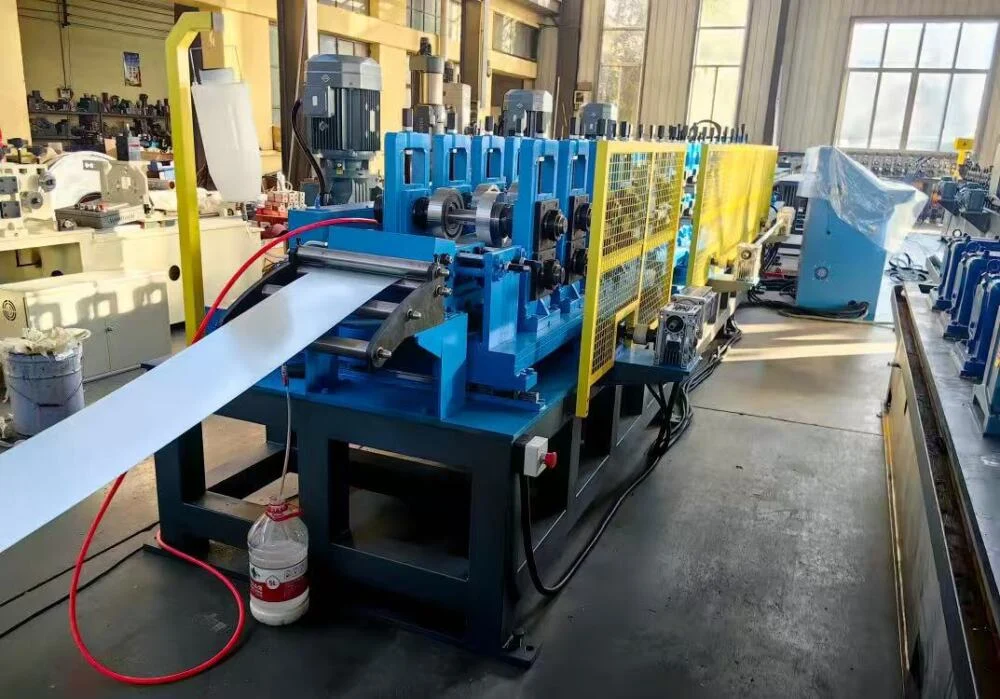
2.Feeding and Leveling Device
Guides the steel strip into the forming section. The multi-roll straightener eliminates coil bending and internal stress, ensuring a flat and straight entry for precise forming.
Pneumatic or manual clamping rollers; adjustable leveling gap; limit switches prevent misfeeding.
3.Main Roll Forming Section:
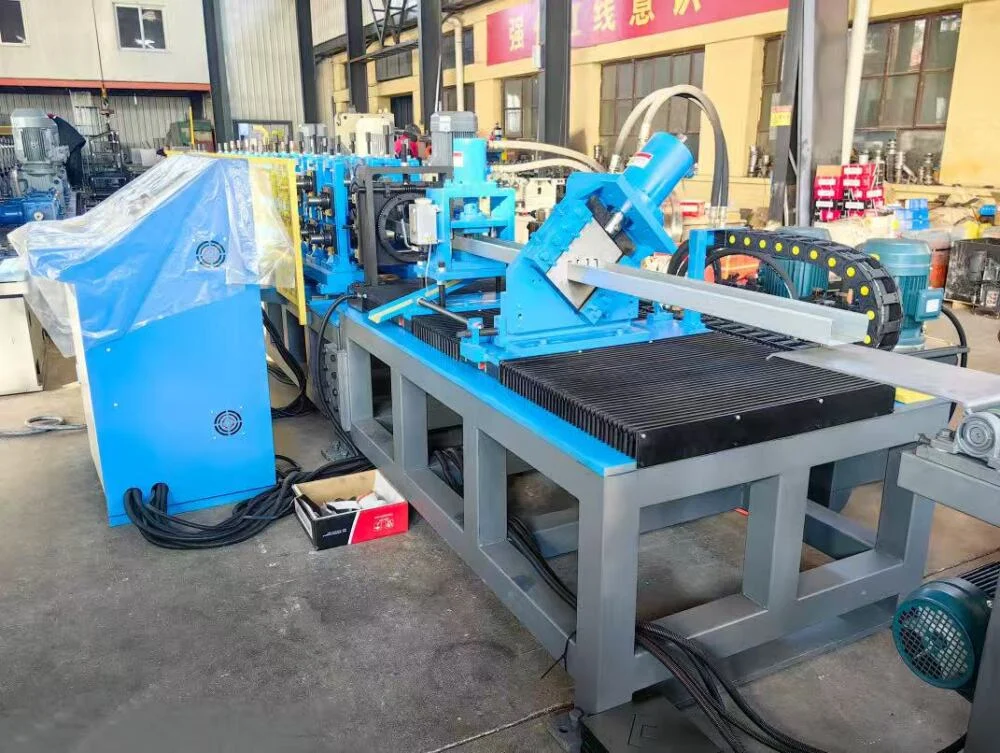
The core of the machine. Flat strip is passed through 16-24 forming rollers (arranged on adjustable subframes). Each roller pair gradually bends the strip until the final C- or U Channel is achieved.
PLC-controlled forming speed (15–25 m/min, up to 30 m/min on high-speed models). Rollers are made of GCr15 steel, HRC58-62°, and chrome-plated. A quick-change system (automatic or manual) switches between C- and U-shaped profiles.
4.Hydraulic cutting unit:
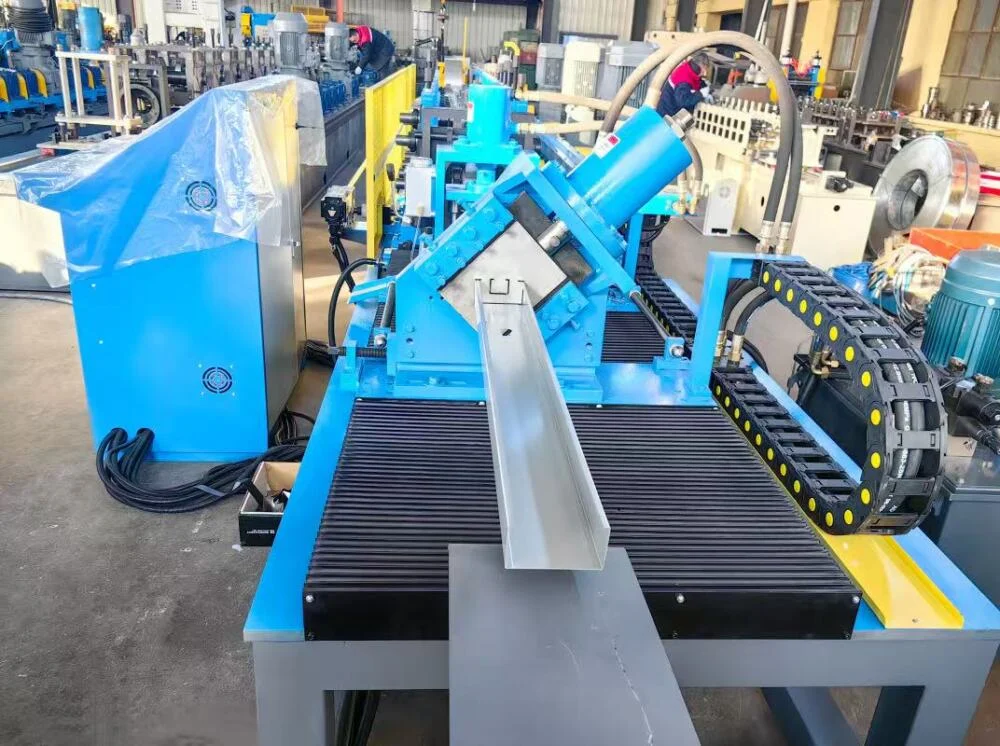
Cuts continuously formed Channels to a preset length. Two cutting modes are available:
- Stop cutting: Material stops, die descends – highest precision (±0.5mm).
- Flying saw (optional): Cuts without interruption – faster speed, slightly lower tolerance (±1.5mm).
Blade material: Cr12Mov, hardened. Cutting length is set via HMI; length is automatically measured via encoder; waste material is automatically removed from the first/last irregular workpiece.
5.Automated Stacking System (Optional)
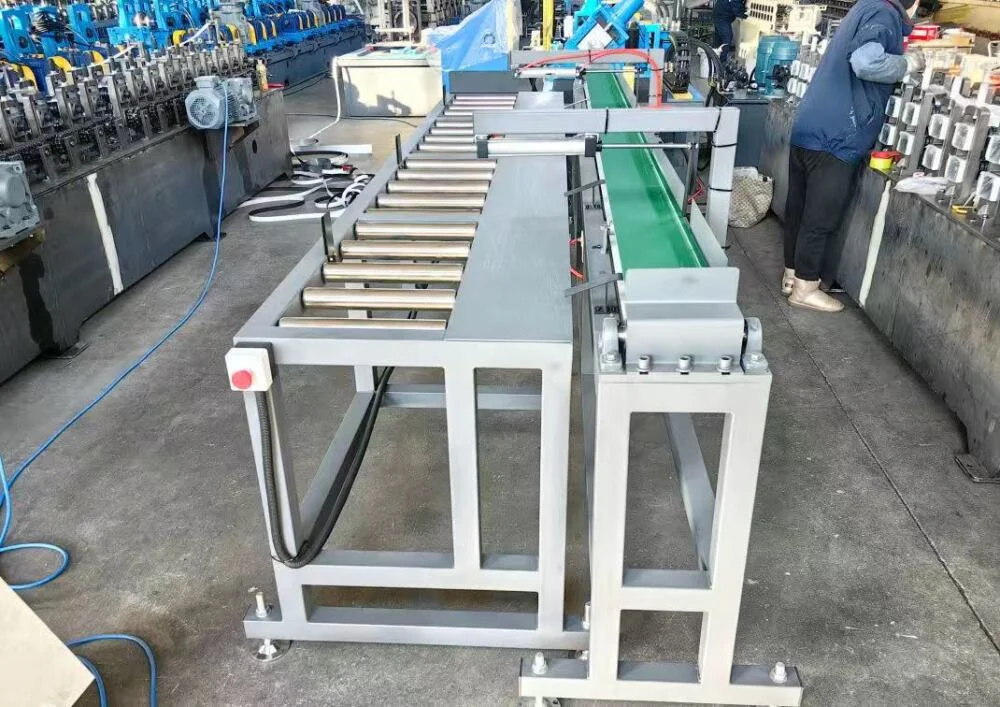
Collects finished Channels, aligns them, and then neatly stacks them on pallets. Significantly reduces manual labor and improves workplace safety.
Pneumatic or servo-controlled stacking arms; adjustable stacking height (up to 500mm); programmable number of layers.
Central Control: PLC + HMI Touchscreen
All workstations are coordinated by a central PLC control system (Siemens, Mitsubishi, or Panasonic) and a user-friendly HMI touchscreen interface. Operators can:
1.Pre-set cutting length, batch size, hole positions, punching interval, and forming speed
2.Save recipes for different Channel sizes and profiles – one-click recall
3.Monitor real-time production status (completed length, number of pieces produced, machine alarms)
4.Switch between automatic mode (start and release) and manual mode (for setup and maintenance)
5.Select a multi-language interface (English, Spanish, Arabic, French, Russian, etc.) – ideal for export operators
Example: When producing 500 6-meter Z100 Channels (each with 3 bolt holes), the operator enters these parameters once. The machine automatically pulls the coil, punches holes every 600 mm to form a Z-profile, precisely cuts 6000 mm, and stops when 500 pieces are stacked. No manual measurement is required, no offline drilling is needed, and there are no counting errors.
Estimated Production Capacity (Based on Standard Model)
| arameter | Value |
|---|---|
| Forming speed | 15 m/min (standard) / 25 m/min (high‑speed) |
| Cutting time per piece | 2–3 seconds (stop cutting) |
| Typical Channel length | 4 m to 12 m |
| Output per hour (6m Channels) | ~120–150 pieces (standard speed) |
| Output per 8‑hour shift | ~960–1200 pieces |
| Material yield | >98% (scrap only from coil ends) |
Integration Options for Export Markets
To ensure smooth operation of your local factory, our machines are pre-configured for:
- Voltage and Frequency: 220V / 380V / 400V / 415V / 440V, 50Hz or 60Hz (as specified in the order)
- CE / ISO 9001 Certification Available
- Complete Documentation: English manual, electrical diagrams, installation videos, and troubleshooting guide
- Remote Support: PLC allows remote access via TeamViewer/VNC for diagnostics
Why a Fully Automated Production Line Matters for Your Business
- Lower Labor Costs – One operator instead of three
- Greater Consistency – Every Channelis identical; no human error in length or hole placement
- Faster Changeover – Switching between C/U or different sizes takes minutes, not hours
- 24/7 Production Ready – Reliable components support continuous shifts
- Export-Friendly Packaging – The entire production line is divided into modular sections, packed in fumigated wooden crates, ready for 40-foot high cubic meter container shipping
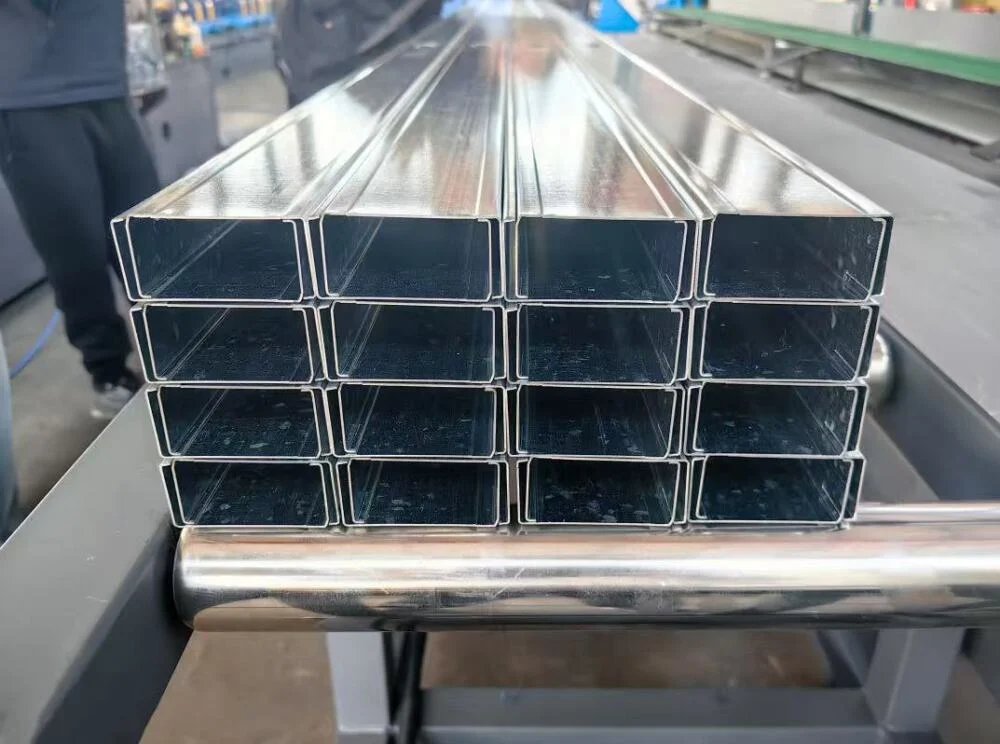
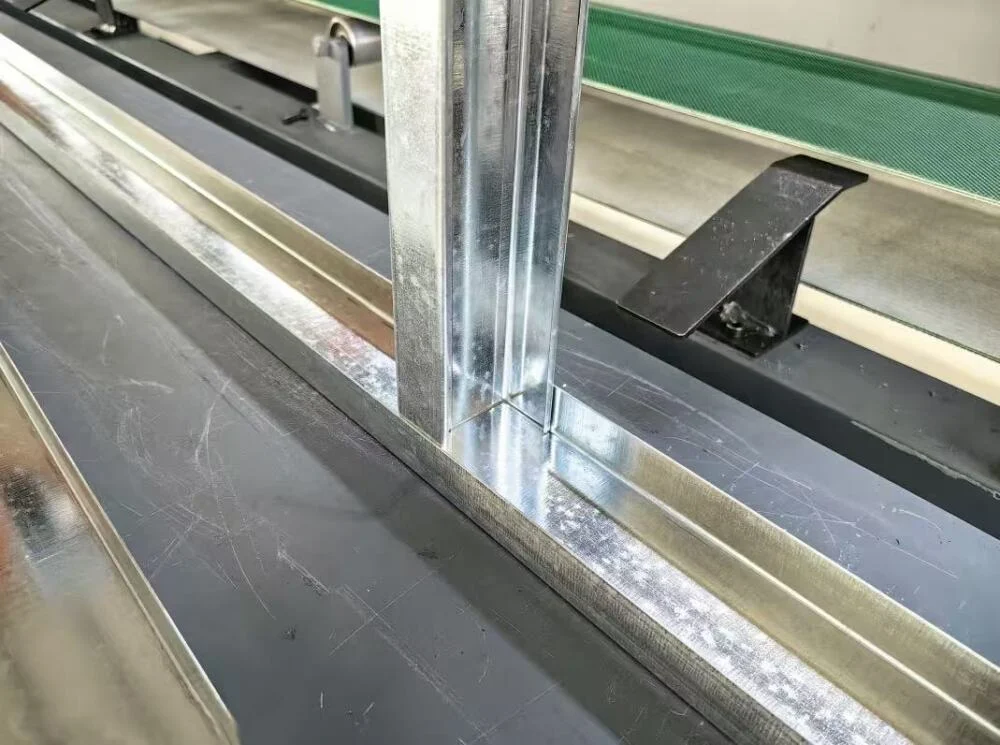
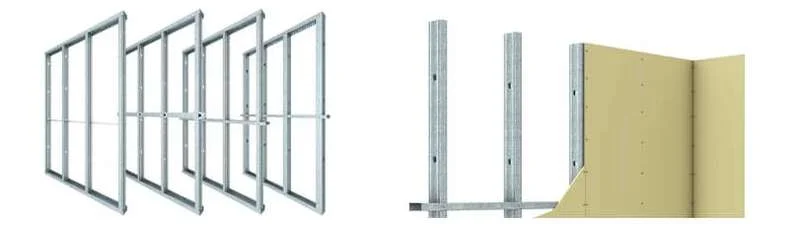
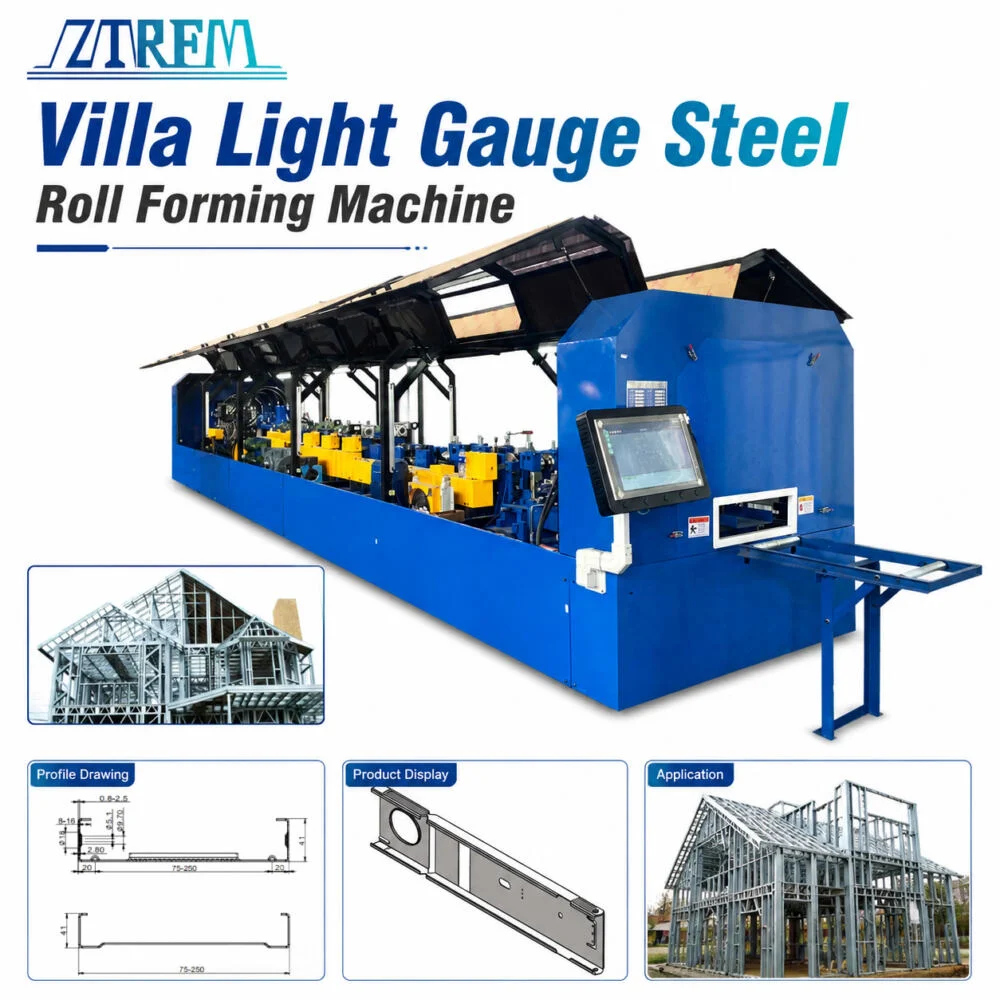
Finished Product Display and Application:
- Light steel villa construction: Used for the fabrication of house frames and wall framing.
- Interior partition systems: Partition framing structures for factories, office buildings, shopping malls, supermarkets, etc.
- Drywall and ceiling systems: CD/UD series for ceiling framing, CU/CW series for wall frames.
- Steel structure buildings: C/U-shaped Channels and other structural components.
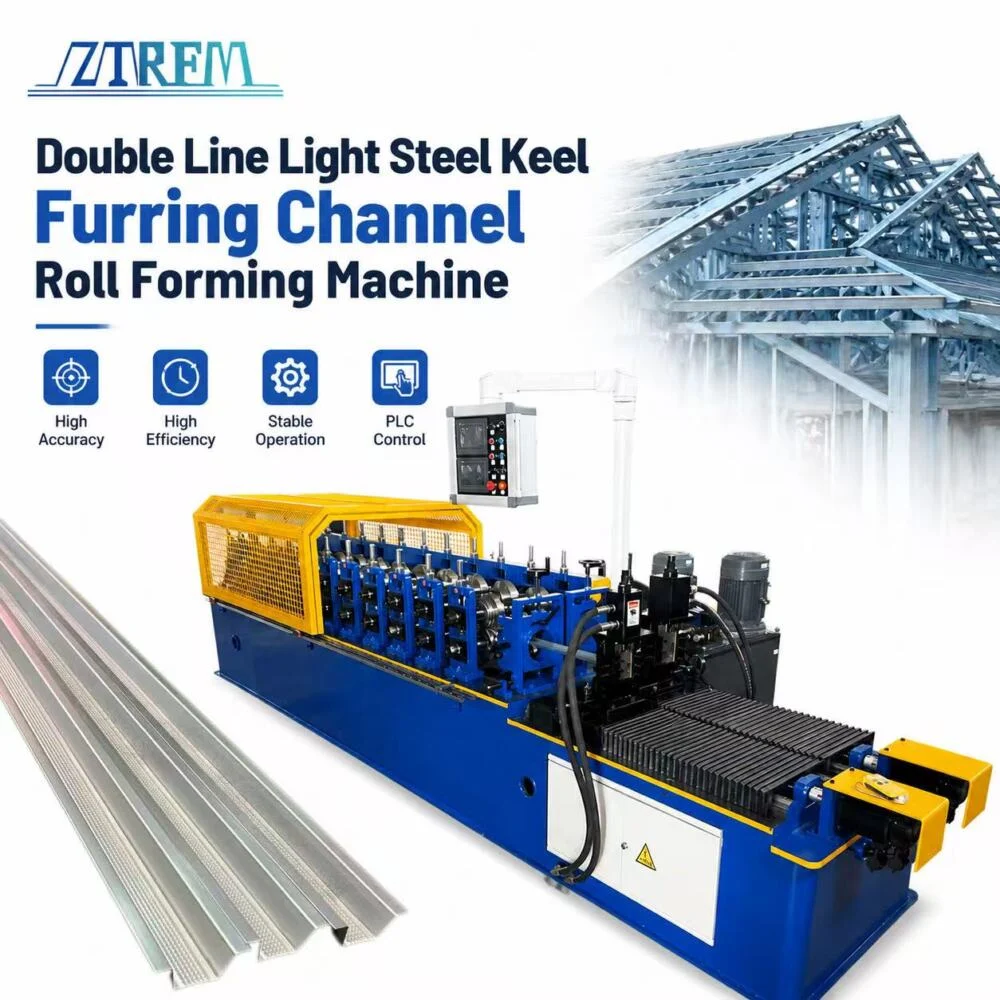
Other types of Channels:
Contact Us: